

Eating shows up in dreams far more often than most people realize. Sometimes it’s a perfectly normal dinner, other times it’s a slice of cake so vivid you swear you can taste the sugar.
These dreams feel strangely real, leaving you wondering why your brain keeps returning to something you already do so when awake.
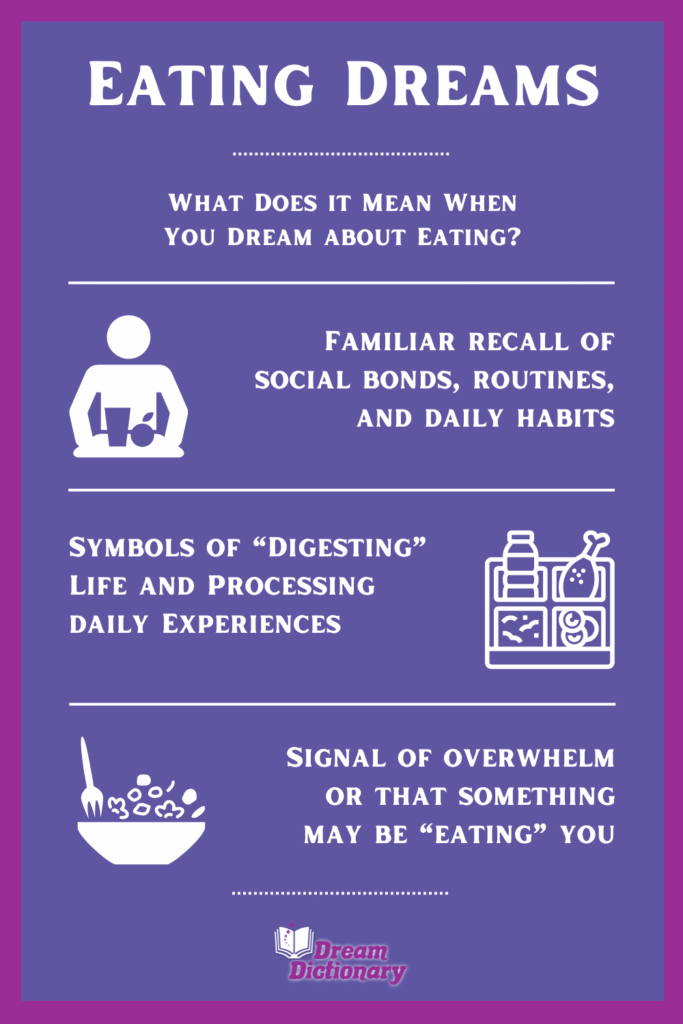
Meals are tied to routine, emotion, memory, and social bonds, so it makes sense that the mind occasionally replays them at night.
We explore why dreams about eating appear in so many different ways, what shapes these experiences, and why they can feel comforting or even surprising.
The Meaning of Eating Dreams
You may be dreaming that you’re preparing food one second and jump to a dinner table the next. Dream scenes shift rapidly here because the brain doesn’t follow real-life timing.
Other eating dreams unfold almost in slow motion. You may notice every tiny movement in these dreams, like the way a drink is poured or the warmth of a meal. These scenes often feel peaceful, like the brain is zooming in on sensory experiences.
Some people describe dreams where they can’t take a bite, the food disappears, or they keep walking around with a meal they never finish. These interruptions happen when REM sequences shift or when the brain drops one idea and grabs another.
Details and Context
Family members, strangers, or friends may appear out of nowhere in dreams about food, often without conversation.
When you dream about cooking for someone you care about, sharing a meal with friends, sitting at a crowded table, or noticing unfamiliar faces gathered for dinner, your mind may be sorting through relationships and emotional bonds.
Even concepts like spiritual nourishment or personal growth can float through the edges of these dream moments because they’re part of the emotional landscape.
A common theme in these dreams is the presence of food, but the inability to eat. Are you holding yourself back from nourishment or connection?
Bizarre or Unusual Eating
The obvious link with eating in a dream is to the symbol of food, but what if you’re eating something else?
Eating takes on whole other layers of meaning when you’re consuming troubling objects. Whether you see yourself devouring nails, trees, or even a whole house or city, the image can be disturbing.
Is there something you are “consuming” in your waking life that you shouldn’t be? These dreams may be a warning to stop before you cause yourself harm.
The obvious symbol is here overindulgence, but not always food. Are you doing too much or taking on too many roles or activities?
If you find yourself eating something rotten, moldy, or expired then you may need to examine what has these characteristics in waking life. A relationship or part of yourself may no longer be serving you.
Were You Eaten?
If your dream flips and it’s YOU being eaten, that could be a sign that you’re losing yourself. Are you compromising too much or being taken over by something negative?
Consider the old phrase “what’s eating you?” These dreams may appear during chronic stress or out-of-control periods in life. They could indicate something has been bothering you for a while, and your dream is trying to make you consciously aware of that.
Being eaten by different creatures corresponds to different degrees of the problem. For example, getting eaten by mice or worms might show you a nagging, but less urgent issue. It it’s a shark or a dinosaur, the issue is likely bigger!
More Idioms and Metaphors
Another common phrase is that we “have a lot on our plate.” If you feel like that in your daily life, your dream may serve as a way for your mind to synthesize or compartmentalize the long list of tasks you have to do.
One saying people use is that we’ve “bit off more than we can chew.” Notice the nature of eating in your dream. Is it difficult? Are you enjoying it, or do you never swallow what you eat? This symbol might mean you’re overextended and not finding enjoyment in your actions.
A powerful symbol linked with eating involves dreaming of your stomach. Because this is where we digest food, the stomach also brings in a metaphor for processing or “digesting” life experiences.
Think about the phrase “I can’t stomach this.” It’s a popular saying, but rarely used in regard to food. Instead, it’s how people describe their reactions to betrayal, misfortune, or other negativity. Is anything in life making you feel this way?
Why Does Eating Appear in Dreams?
If you’ve been thinking about trying certain foods, planning meals, cooking more often, or adjusting your diet, the dream world may stitch these ideas into a scene.
Eating is such an ordinary part of our day-to-day life that the mind slips it into dreams almost without trying. It’s familiar, emotional, and tied to hundreds of tiny routines your brain remembers automatically.
These daily patterns give the subconscious a familiar way to express itself symbolically when we dream. Unlike abstract dream symbols that require lots of insight to decipher, a simple act like eating in your dream is much easier to understand.
From hunger cues to nostalgia, there’s always a reason eating shows up at night. Dream scenes may look random, but the triggers behind them usually come from your body, emotions, or daily habits.
Familiarity of the Activity
In waking life, we make thousands of decisions about food, like what to eat, when to eat, who to share dinner with, and when to stop eating. These memories are closely linked to the emotional centers of the brain.
When sleep begins, those same regions light up, replaying sensations and certain foods from real life without any conscious control.
Eating food is one of the easiest actions for the subconscious mind to recreate. Your brain already knows the rhythm of lifting a fork, chewing, tasting, passing a plate, or sitting at a table. You may even see yourself grocery shopping in a dream before you eat anything.
These motions are automatic in waking life, so they become effortless material for the dream world to use.
A Reaction to Physical Cues
Food dreams may also show up when the body sends its own messages. Feeling hungry before bed, eating too late, changes in appetite, or fluctuating blood sugar can all lead to dreaming about eating.
More often than not, the mind is simply reacting to these physical cues. When your body needs nourishment, your brain may respond with a dish of “dream food.”
It’s one of our subconscious’s most natural bridges between body and mind.
Emotion and Creativity
Mealtime is tied to comfort, pleasure, friends, family, and relationships. Such strong emotions often naturally appear in dreams.
Sharing or preparing food in your dream, or noticing family members at the table can mean the brain is working through social bonds or familiar routines, especially when those connections feel uncertain, strained, or particularly meaningful.
And then there’s the creativity factor. When we sleep, the brain blends ideas in various ways. Unusual food combinations, tasting raw emotions through symbolic textures, or seeing rotten food next to something delicious indicates this blending is taking place.
The actual consumption of this mix of new or odd substances is a hint your mind is preparing you for new experiences when awake.
This is simply the mind experimenting, exploring, testing connections, and letting old memories mix with new ones.
Why Eating in Dreams Feels So Real
One reason dreams about eating stand out is that the brain regions involved in processing food (taste, smell, touch, and even hunger) stay surprisingly active during REM sleep.
Additionally, taste and smell are closely tied to memory. When you dream of eating, the brain often pulls from stored sensory snapshots like the citrus of certain fruits or the sweetness of a favorite nostalgic dessert.
This is why eating in the dream can feel almost indistinguishable from reality.
The olfactory cortex (responsible for smell) and parts of the gustatory cortex (taste) can activate without any real sensory input. These activators blend with strong emotions, creating hyper-real dream sensations. Sometimes, when people wake from such dreams, they even notice increased hunger or thirst, as if the body and mind are echoing the same idea.
All in all, dream meals seem real because the brain treats it like real ones, borrowing from memory, prediction, and sensory imagination.
Taste Is Surprisingly Rare
Interestingly, taste is one of the least common sensory experiences in the entire dream world.
Out of thousands of recorded dreams, only about one percent include a clear gustatory moment. Most descriptions focus on the setting, people, or the action of eating food, but not the flavor.
It seems the subconscious mind cares more about the idea of eating than the details of how the food tastes.
Those are moments when the subconscious mind decides to turn the volume all the way up in one sense, letting you experience it with full intensity.
Historical Meaning and Symbolism
Ancient writers, philosophers, and religious texts all recorded moments where food appeared in the dream world.
Eating appears in ancient Greek writing. Philosophers like Aristotle noted that dreams often reflect sensory impressions from waking life, including hunger. In “On Dreams,” he wrote about how bodily states influence dreaming, using examples like feeling hungry or thirsty before sleep.
This poetic observation about how physical hunger can shape dreams is as applicable today as it was in ancient times.
Medieval texts recorded similar observations. Monastic writers described dreams of dinner or preparing food during periods of fasting, noting how the soul had appetite even when the body abstained.
Dreams and Hunger in the Bible
The phrase “a hungry man dreameth” comes from a well-known passage in the Book of Isaiah (29:8). It describes hunger carrying over into the dream world: “It shall be as when a hungry man dreameth, and behold, he eateth; but he awaketh, and his soul is empty.”
“A thirsty man dreameth, and he awaketh faint” appears in the same passage, echoing the idea that the dream world borrows sensations from the body.
These lines show that dreaming of eating food or drinking isn’t a modern curiosity. People noticed this symbolism it thousands of years ago.
Food is deeply tied to survival, routine, and community. These examples remind us of universal human experience that existed long before the concept of psychology.